Architectural Surface Materials: Selection Guide
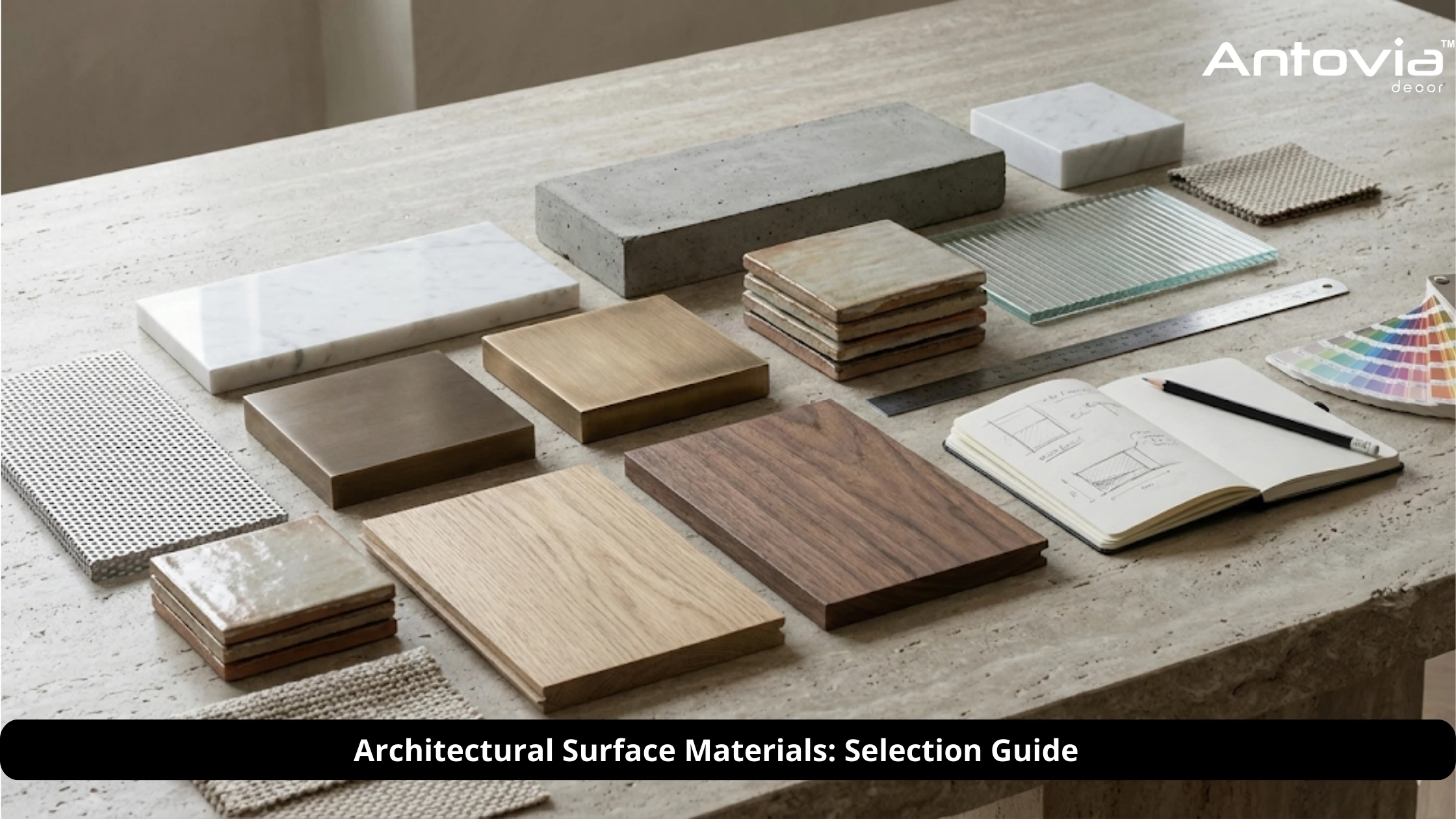
Architectural surface materials play a defining role in how modern buildings look, perform, and age over time. While structural systems determine strength and stability, surface materials determine durability, maintenance cycles, safety, and the overall user experience. From interior walls and furniture to facades, soffits, louvers, and exterior ceilings, surfaces are continuously exposed to wear, moisture, heat, pollution, and human interaction.
In today’s construction environment, selecting architectural surface materials is no longer a decorative decision. Poor material choices often lead to fading finishes, moisture penetration, cracking panels, corrosion, and frequent repairs within just a few years. On the other hand, well-specified building surface materials protect the building envelope, maintain design intent, and significantly reduce long-term costs.
This architectural material selection guide is written for architects, interior designers, builders, facade consultants, and developers who want a clear, performance-driven approach to choosing architectural surface materials for interior, exterior, and facade applications—especially for projects where longevity and reliability matter.
What Are Architectural Surface Materials?
Architectural surface materials are the finishes and protective layers applied to building elements such as walls, facades, ceilings, furniture, and exterior envelopes. Unlike structural materials, which carry loads, surface materials are responsible for protection, durability, aesthetics, and usability.
Architectural surface finishes serve multiple functions:
- Protect structural elements from environmental exposure
- Improve hygiene and cleanability
- Enhance visual appeal and material consistency
- Support fire safety and regulatory compliance
Common categories of architectural surface materials include laminates, compact panels, facade cladding systems, architectural louvers, soffit panels, and ceiling surfaces. In contemporary architecture, these materials are specified as performance systems, not just decorative layers.
Why Material Selection Matters in Architectural Design
Material selection has a direct impact on a building’s lifecycle. Many surface-related failures—peeling coatings, staining, delamination, corrosion—are not construction defects but specification errors made during early design stages.
Key reasons architectural material selection matters:
Durability:
Surfaces are subjected to constant abrasion, cleaning, impact, and environmental stress. Inadequate materials degrade quickly.
Maintenance Cost:
Some architectural materials require repainting or replacement every few years, increasing operational expense.
Safety & Compliance:
Fire-resistant architectural surface materials are essential for commercial, institutional, and high-rise projects.
Lifecycle Value:
Materials with a low initial cost often result in higher long-term expenditure due to frequent repairs.
In real-world projects, incorrect surface material selection can double maintenance costs within the first decade.
Key Factors to Consider When Selecting Architectural Surface Materials
A reliable architectural material selection guide focuses on performance first, aesthetics second.
Interior vs Exterior Exposure
Interior architectural materials operate in controlled environments, while exterior materials face UV radiation, rain, humidity, wind, and pollution. Using interior-grade materials outdoors is one of the most common specification mistakes.
Climate Conditions
Architectural materials for Indian climate conditions must handle extreme heat, heavy monsoons, humidity, and airborne pollutants. Climate suitability should always override visual preference.
Usage Intensity
High-traffic areas such as commercial buildings, hospitals, transport hubs, and public spaces demand durable architectural materials with high abrasion resistance.
Fire Safety Requirements
Fire-retardant and fire-resistant surface materials are mandatory in many regulated projects and cannot be treated as optional upgrades.
Maintenance Expectations
Low maintenance architectural materials reduce repainting, repair cycles, and disruption to building operations.
Budget vs Lifecycle Cost
The best architectural surface materials balance upfront cost with durability, appearance retention, and reduced replacement risk.
Popular Architectural Surface Materials Used in Modern Buildings
Modern architecture relies on a combination of surface materials, each selected for a specific functional requirement.
High Pressure Laminates (HPL)
HPL laminate sheets, architectural laminate sheets, and compact laminate sheets are among the most widely used architectural surface materials. Manufactured under high pressure and temperature, they offer excellent abrasion resistance, moisture stability, and long-term finish consistency. HPL is commonly used for interior walls, furniture, partitions, and exterior architectural panels.
Exterior Grade Architectural Panels
Exterior grade HPL panels and other exterior architectural panels are engineered to withstand UV exposure, rain, humidity, and temperature fluctuations. These materials are widely used as facade surface materials and exterior cladding materials in commercial and institutional buildings.
Architectural Louvers
Architectural louvers are functional surface systems that control sunlight, improve ventilation, and enhance facade depth. They also contribute to thermal comfort and building energy efficiency.
Soffit & Ceiling Surface Materials
Exterior soffit panels, soffit ceiling panels, soffit cladding panels, and exterior ceiling panels protect exposed slab undersides, balconies, canopies, and parking areas while delivering clean architectural detailing.
Each architectural surface material solves a different design and performance challenge—there is no universal solution.
Architectural Surface Materials by Building Zone
Architects typically select surface materials based on building zones, not individual products.
Entrance & Lobby Zones
These high-visibility spaces require architectural surface finishes that resist abrasion, staining, and frequent cleaning while maintaining a premium appearance.
Facade & External Envelope
Facade surface materials must withstand UV radiation, moisture, wind pressure, and pollution. Weather resistant facade materials are essential for long-term exterior performance.
Balconies, Overhangs & Soffits
Exterior soffit panels and soffit cladding panels protect exposed slabs and improve durability in semi-outdoor areas.
Soffit panels for balconies and soffit panels for parking areas must handle moisture, impact, and constant exposure.
Interior Circulation Areas
Corridors, staircases, and lift lobbies benefit from low maintenance architectural materials that resist scuffing and wear.
Commercial & Public Zones
Soffit panels for commercial buildings, along with heavy-duty surface materials, ensure performance in high-traffic environments.
Performance Requirements of Architectural Surface Materials
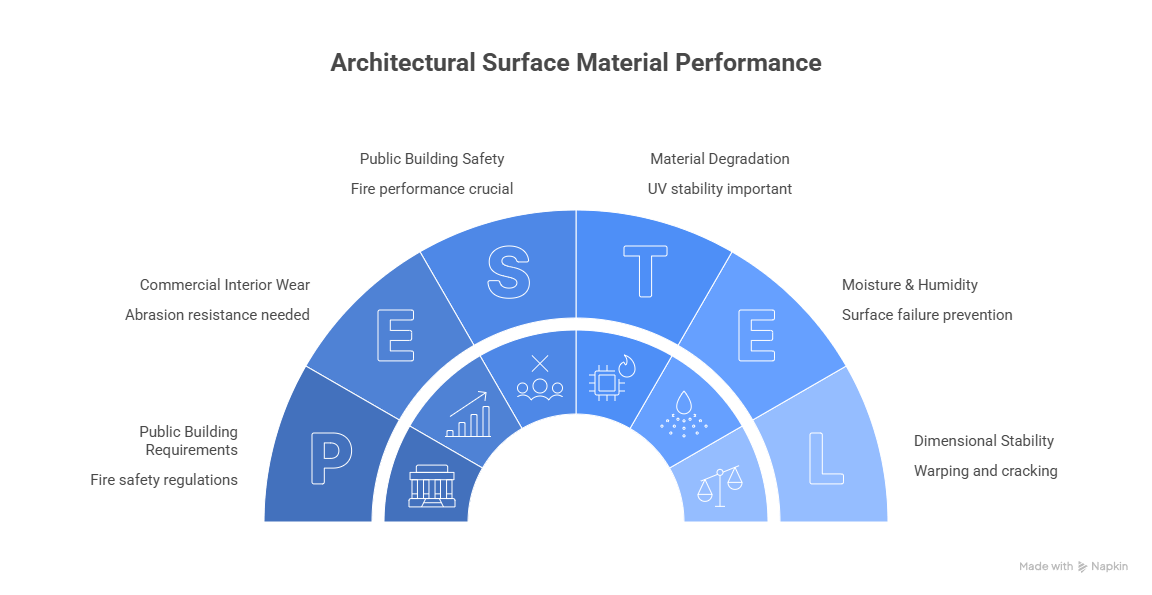 Many surface materials look similar on drawings but behave very differently once installed.
Abrasion Resistance
Critical for furniture, corridors, and commercial interiors where daily wear is unavoidable.
Moisture & Humidity Resistance
Moisture resistant architectural surface materials prevent swelling, staining, and surface failure in wet or exposed areas.
UV Stability
UV resistant architectural materials protect surfaces from fading, chalking, and degradation.
Fire Performance
Fire resistant architectural surface materials are required in public buildings, healthcare facilities, and high-rise projects.
Dimensional Stability
Materials must resist warping, expansion, and cracking due to temperature changes.
Architectural Surface Materials for Interior Applications
Interior architectural surface materials focus on hygiene, durability, and visual consistency.
Typical interior applications include:
- Wall cladding and partitions
- Furniture and cabinetry
- Interior ceilings and panels
- Commercial and institutional interiors
Decorative laminate sheets, HPL laminate sheets, and compact laminates are widely used interior building surface materials due to their scratch resistance, ease of cleaning, and wide design options.
Architectural Surface Materials for Exterior & Facade Applications
Exterior and facade applications are the most demanding.
Exterior cladding materials and facade surface materials must deliver:
- Long-term weather resistance
- UV stability and color retention
- Fire safety compliance
- Secure fixing systems
Using interior-grade products outdoors remains one of the most expensive specification errors in construction.
Interior vs Exterior Architectural Surface Materials: Key Differences
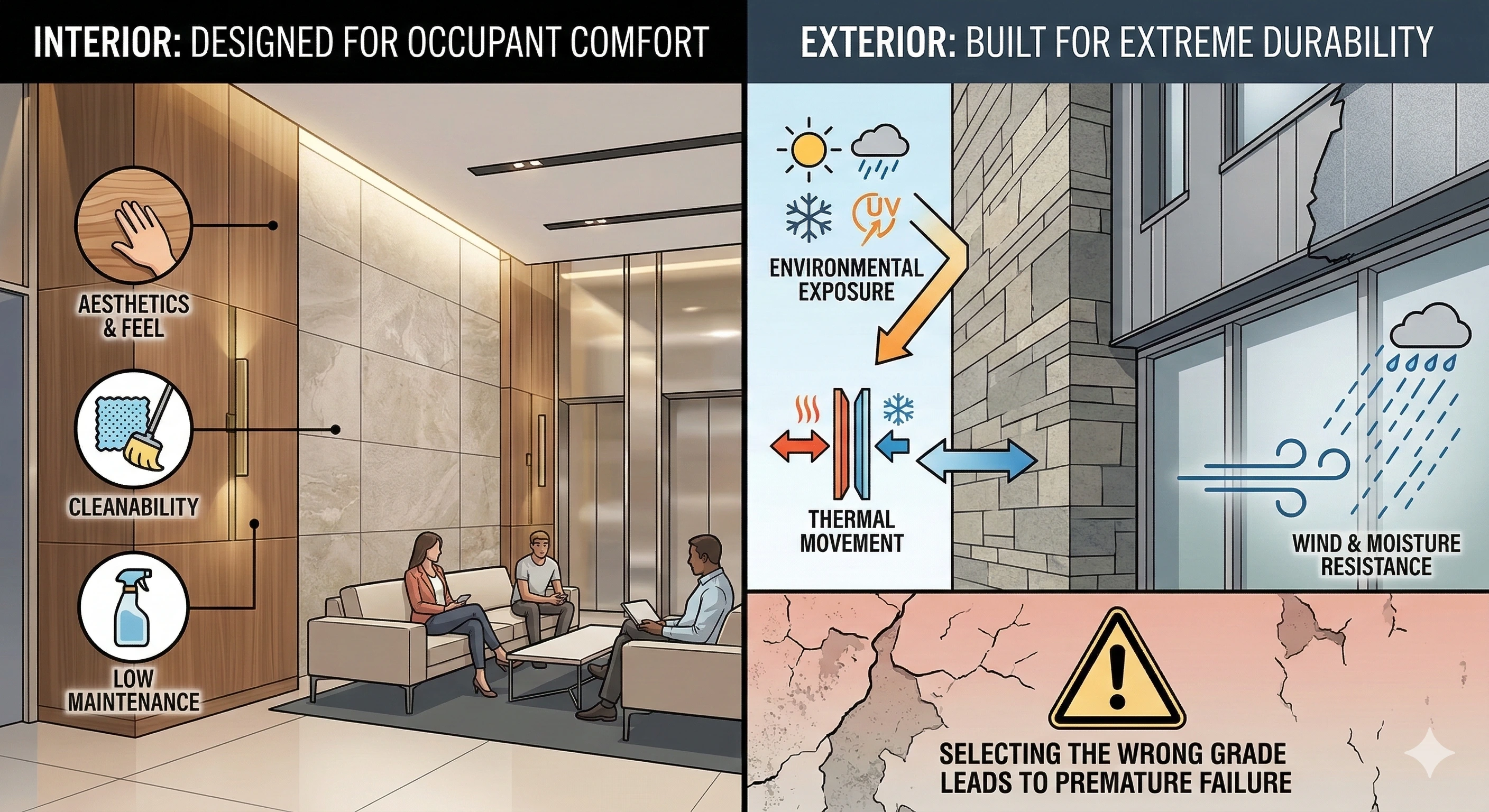
Interior and exterior architectural materials differ significantly.
Interior materials prioritize aesthetics and cleanability, while exterior materials must handle:
- Environmental exposure
- Thermal expansion and contraction
- Wind and moisture pressure
Selecting the wrong grade almost always leads to premature surface failure.
Low-Maintenance & Durable Architectural Surface Materials
For commercial and institutional projects, low maintenance architectural materials are increasingly preferred.
They offer:
- Reduced repainting and repair cycles
- Consistent long-term appearance
- Lower operational and lifecycle costs
HPL architectural panels, compact laminates, aluminium architectural panels, metal facade panels, and engineered exterior systems are commonly used durable architectural materials.
Architectural Surface Materials for Indian Climate Conditions
India’s climate accelerates surface degradation when materials are poorly specified.
Key challenges include:
- Extreme heat and prolonged UV exposure
- Heavy monsoon rainfall
- High humidity in coastal regions
- Pollution and dust in urban environments
Architectural materials for Indian climate conditions must be moisture resistant, UV stable, and structurally reliable. Materials that perform well in temperate regions often degrade faster in Indian conditions if not adapted properly.
Comparison of Common Architectural Surface Materials
|
Material Type |
Best Used For |
Durability | Maintenance | Interior / Exterior |
| HPL Laminates | Walls, furniture, panels | High | Low | Both |
| Compact Laminates | Wet areas, exterior zones | Very High | Very Low | Exterior |
| Aluminium Panels | Facades, soffits, ceilings | High | Low | Exterior |
| Architectural Louvers | Sun control, ventilation | High | Low | Exterior |
| Soffit Panels | Balconies, parking areas | High | Low | Exterior |
Common Mistakes to Avoid When Selecting Architectural Surface Materials
Frequent specification mistakes include:
- Selecting materials based only on appearance
- Ignoring climate exposure
- Using interior materials outdoors
- Underestimating maintenance needs
- Poor coordination between design and execution
Avoiding these mistakes significantly improves long-term building performance.
How Architects and Designers Can Build the Right Surface Material Palette
A successful surface material palette balances aesthetics with performance.
Architects should:
- Coordinate interior and exterior surface materials
- Balance textures and finishes across zones
- Prioritize durability in exposed areas
- Think in terms of lifecycle value rather than trends
Why Architects Choose Architectural Surface Materials from Antovia Decor
Architects and designers increasingly seek architectural surface materials that perform consistently across interior and exterior applications. Antovia Decor focuses on surface solutions engineered for durability, climate readiness, and long-term finish stability. With offerings that include HPL laminate sheets, exterior architectural panels, architectural louvers, and exterior soffit panels, Antovia Decor supports projects where material reliability and design consistency are equally important.
Final Thoughts: Choosing the Right Architectural Surface Materials
Architectural surface materials influence how buildings look, perform, and age. The right materials protect structural elements, reduce maintenance, and preserve design intent, while poor choices lead to premature failure and unnecessary cost.
Successful projects treat architectural surface materials as long-term investments rather than decorative afterthoughts. By carefully considering exposure, usage, climate, and lifecycle value, architects and developers can deliver buildings that remain durable, functional, and visually strong for decades.
Frequently Asked Questions (FAQ)
1) What are architectural surface materials?
They are finishes and protective layers applied to walls, facades, ceilings, furniture, and exterior elements.
2) Which architectural surface materials are best for facades?
Exterior grade panels, HPL architectural panels, louvers, and weather-resistant cladding systems.
3) How do architects choose surface materials for buildings?
By evaluating exposure, usage, maintenance needs, fire safety, and lifecycle cost.
4) Are HPL panels suitable for exterior applications?
Yes. Exterior-grade HPL panels are designed for UV exposure, moisture, and temperature variation.
5) Which surface materials require low maintenance?
Compact laminates, aluminium panels, HPL architectural panels, and engineered exterior systems.


