HPL Laminate Sheet: Features, Uses, Benefits, And More
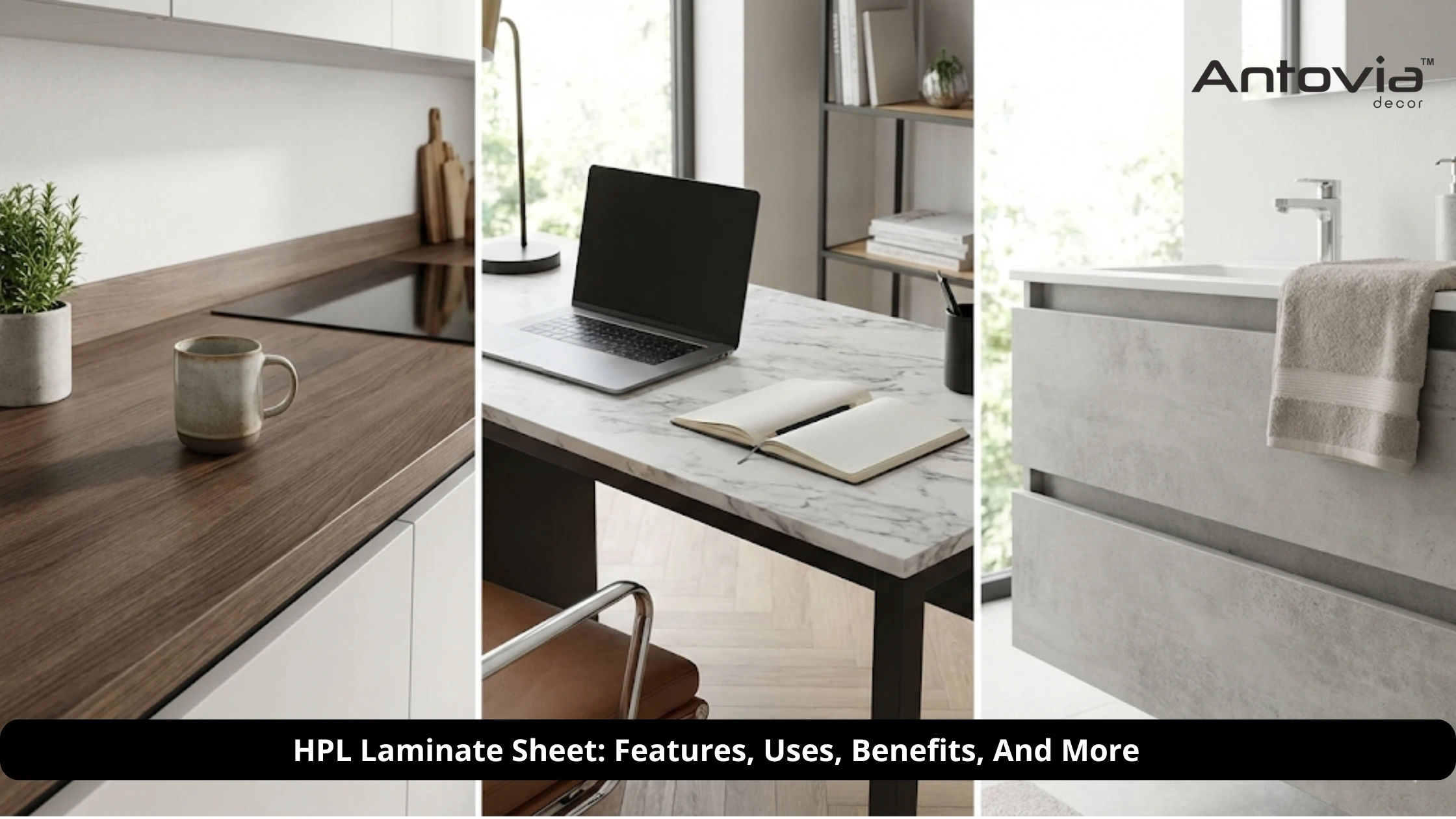
Choosing the right surface material has become a critical decision in modern construction and interior design. From furniture and cabinetry to wall cladding and commercial interiors, surfaces are expected to withstand daily wear, moisture, heat, and constant cleaning—without losing their appearance. This is where HPL laminate sheets stand out as a reliable and long-lasting solution.
Unlike basic decorative laminates that focus mainly on looks, HPL laminate sheets are engineered for performance. They are designed to handle high-traffic use, demanding environments, and long-term exposure without frequent replacement or maintenance. This comprehensive guide explains what an HPL laminate sheet is, how it is made, its features, benefits, applications, and how to decide whether it is the right choice for your project.
This article is intended for architects, interior designers, builders, furniture manufacturers, and project decision-makers who want clarity, not confusion.
What Is an HPL Laminate Sheet?
An HPL laminate sheet, also known as a high pressure laminate sheet, is a decorative surface material manufactured by compressing multiple layers of kraft paper impregnated with resin under extremely high pressure and temperature. The result is a dense, durable laminate with excellent resistance to wear and environmental stress.
What separates HPL from regular laminates is its manufacturing process. While standard laminates are often thin surface layers meant for light use, HPL sheets are solid, compact, and built for demanding applications. This makes them suitable not only for residential interiors but also for commercial spaces, healthcare facilities, educational institutions, and high-traffic environments.
HPL laminate sheets are commonly used on:
- Furniture surfaces
- Wall cladding and partitions
- Cabinet shutters and storage units
- Commercial interiors
Because of their strength and stability, HPL sheets are often specified where repainting, frequent repairs, or surface replacement is not acceptable.
How HPL Laminate Sheets Are Manufactured
The performance of an HPL laminate sheet is directly linked to how it is made.
The manufacturing process involves stacking multiple layers of kraft paper that are impregnated with phenolic resin. A decorative paper layer defines the surface design, and a transparent overlay provides abrasion resistance. These layers are then pressed together under high pressure and high temperature, fusing them into a single, compact sheet.
This process creates a material that is:
- Dense throughout, not just surface-coated
- Structurally stable
- Resistant to impact and abrasion
Unlike low-pressure laminates, HPL sheets do not rely solely on a thin decorative layer. Their strength comes from the entire thickness of the sheet, which is why they perform consistently over time.
In practical terms, this means HPL laminates are less likely to crack, peel, or delaminate under normal use.
Key Features of HPL Laminate Sheets
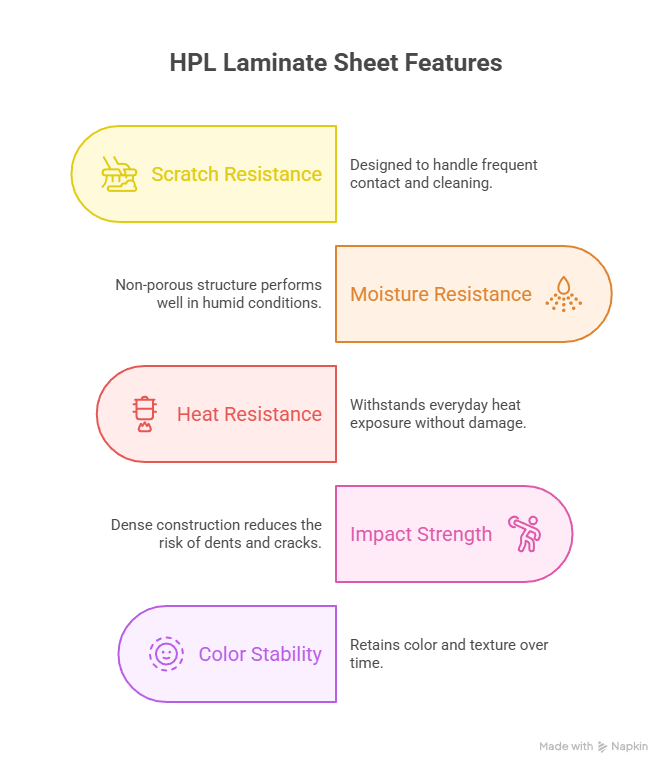
HPL laminate sheets are known for a combination of performance features that make them suitable for both residential and commercial applications.
High Scratch and Abrasion Resistance
HPL laminates are designed to handle frequent contact, movement, and cleaning. This makes them ideal for furniture, work surfaces, and wall panels in busy environments.
Moisture and Humidity Resistance
Because of their non-porous structure, moisture resistant laminate sheets made from HPL perform well in kitchens, utility areas, and humid conditions.
Heat Resistance
HPL laminate sheets can withstand everyday heat exposure from appliances and lighting without surface damage, making them suitable for kitchen and work surfaces.
Impact Strength
The dense construction of HPL gives it high impact resistance, reducing the risk of surface dents and cracks.
Color and Finish Stability
High-quality HPL laminates retain their color and texture over time, even with frequent cleaning and exposure to light.
In real-world use, these features matter more than specifications on paper. HPL performs best in spaces where surfaces are constantly handled and visually exposed.
Benefits of Using HPL Laminate Sheets
Beyond individual features, HPL laminate sheets offer clear long-term benefits.
One of the biggest advantages is durability. HPL surfaces maintain their appearance and structural integrity for years, reducing the need for replacement or repair.
Maintenance is another major benefit. HPL laminates require only basic cleaning and do not need polishing, repainting, or special treatments. This makes them cost-effective over the product’s lifecycle.
Design flexibility is also a strong advantage. HPL laminate sheets are available in a wide range of finishes, including solid colors, woodgrain, stone, and abstract textures. This allows designers to achieve different aesthetics while maintaining consistent performance.
For commercial and institutional projects, HPL laminates help maintain a clean, professional appearance even under heavy use.
Common Uses of HPL Laminate Sheets
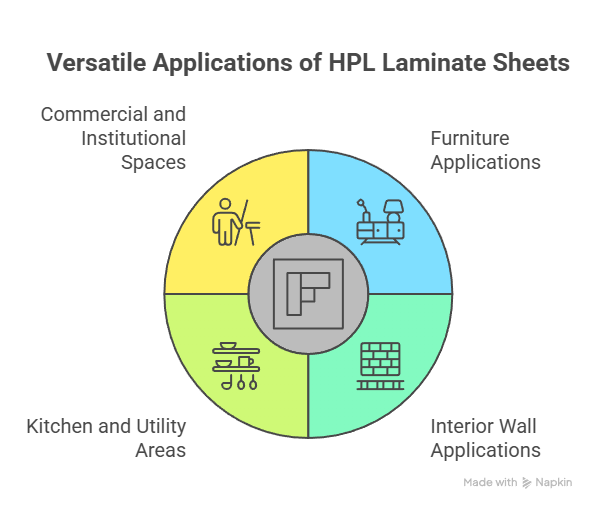
HPL laminate sheets are versatile and used across a wide range of applications.
Furniture Applications
HPL laminate for furniture is widely used in wardrobes, cabinets, tables, shelving, and storage units. Its scratch resistance and easy maintenance make it ideal for daily-use furniture.
Interior Wall Applications
HPL laminate for wall cladding is used in residential and commercial interiors to create durable decorative walls. Offices, retail spaces, and institutional buildings often use HPL panels for partitions and wall finishes.
Kitchen and Utility Areas
HPL laminate for kitchen cabinets is a popular choice due to its moisture resistance and ability to withstand daily wear. Cabinet shutters and internal storage surfaces benefit from HPL’s durability.
Commercial and Institutional Spaces
Hospitals, schools, retail stores, and offices use HPL laminate sheets in areas that require hygiene, durability, and long-term appearance retention.
HPL is often selected where repainting or surface replacement would disrupt operations or increase maintenance costs.
HPL Laminate Sheets for Interior vs Exterior Applications
Not all HPL laminate sheets are the same. Understanding the difference between interior HPL laminate and exterior grade HPL laminate is critical.
Interior HPL laminates are designed for controlled environments where direct sunlight and weather exposure are limited. They are ideal for furniture, wall panels, and cabinetry.
Exterior grade HPL laminates, on the other hand, are engineered to handle:
- UV exposure
- Temperature variations
- Moisture and humidity
These laminates are often used for exterior wall cladding, balcony panels, and semi-outdoor applications. Using interior-grade laminates outdoors can lead to fading, surface damage, and premature failure.
Choosing the correct grade ensures long-term performance and avoids costly replacements.
Interior vs Exterior Grade HPL Laminate
| Criteria | Interior HPL Laminate | Exterior Grade HPL Laminate |
| UV Resistance | Limited | High |
| Weather Resistance | Not suitable for outdoor exposure | Designed for harsh climates |
| Moisture Performance | Suitable for controlled interiors | Performs well in humidity & rain |
| Color Stability | Stable indoors | Long-term fade resistance |
| Common Applications | Furniture, wall panels, cabinetry | Exterior wall cladding, semi-outdoor areas |
| Maintenance | Low | Low |
Thickness, Sizes & Technical Specifications
HPL laminate sheets are available in various thicknesses and sizes to suit different applications.
Common thickness options range from thinner decorative sheets for furniture surfaces to thicker panels for wall cladding and heavy-duty use. Thicker laminates generally offer higher impact resistance and structural stability.
Standard sheet sizes allow efficient coverage with minimal joints, but custom sizes may be available depending on project requirements.
When selecting thickness, it is important to consider:
- Application type
- Substrate material
- Expected wear and impact
Using the correct thickness improves durability and ensures proper installation.
Installation & Maintenance of HPL Laminate Sheets
Proper installation plays a major role in the performance of HPL laminate sheets.
Installation Considerations
- Substrate surfaces must be clean, dry, and level
- Suitable adhesives or fixing systems should be used
- Expansion gaps should be provided where required
- Edge finishing must be done carefully to prevent moisture ingress
Poor installation is one of the most common reasons for laminate failure, even when the material itself is high quality.
Maintenance Requirements
HPL laminate sheets are easy to maintain. Regular cleaning with a soft cloth and mild cleaning agents is usually sufficient. Abrasive cleaners and harsh chemicals should be avoided to protect the surface finish.
With proper installation and basic maintenance, HPL laminates retain their appearance for many years.
HPL Laminate vs Regular Laminate: What’s the Difference?
Although they may look similar, HPL laminates and regular laminates differ significantly.
Regular laminates are generally thinner and manufactured under lower pressure. They are suitable for light-use applications but may not perform well under heavy wear or moisture exposure.
HPL laminate sheets are thicker, denser, and designed for durability. They offer better resistance to impact, heat, and moisture, making them suitable for demanding environments.
In terms of lifespan, HPL laminates typically last much longer and maintain their appearance better than standard laminates.
For projects where performance and longevity matter, HPL is often the safer choice.
Comparison Table: HPL Laminate vs Regular Laminate
|
Feature |
HPL Laminate Sheet |
Regular Laminate Sheet |
| Manufacturing Process |
High pressure & high High |
Low pressure lamination |
| Thickness & Density | Dense, solid structure | Thinner, surface-focused |
| Scratch & Impact Resistance | High | Moderate |
| Moisture Resistance | Strong | Limited |
| Heat Resistance | Suitable for daily heat exposure | Lower heat tolerance |
| Lifespan | 15–25 years or more | 5–10 years |
| Suitable Applications | Furniture, wall cladding, commercial interiors |
Low-use residential interiors |
Is HPL Laminate Sheet the Right Choice for Your Project?
HPL laminate sheets are an excellent choice when durability, hygiene, and long-term value are priorities.
They are particularly suitable for:
- High-traffic residential areas
- Commercial interiors
- Furniture that sees frequent use
- Projects where maintenance must be minimal
However, for low-use decorative applications with tight budgets, standard laminates may still be sufficient.
The key is to balance initial cost with lifecycle value. In many cases, HPL laminates prove more economical over time.
Why Designers Choose HPL Laminate Sheets from Antovia Decor
When durability and finish consistency matter, material quality becomes critical. Antovia Decor focuses on producing HPL laminate sheets that are engineered for long-term performance rather than short-term appearance. Their laminates are designed to handle daily wear, moisture exposure, and frequent cleaning—making them suitable for residential, commercial, and institutional applications.
With stable finishes, precise thickness control, and options suitable for both interior and exterior use, Antovia Decor’s HPL laminate sheets support projects where reliability and clean detailing are essential. For architects and interior designers seeking dependable surface solutions, Antovia Decor offers HPL laminates that balance aesthetics with lasting performance.
Visualise HPL Laminate Interiors with TilesDisplay Tile Visualizer
Choosing HPL laminate sheets is only one part of designing a well-coordinated interior. You also need to consider how the laminate finish will look alongside your flooring and wall tiles. Comparing colours, patterns, and textures before making a final selection can help you create a more harmonious space.
Instead of relying only on product samples or imagination, explore the TilesDisplay Tile Visualizer to discover tile design possibilities for your interior project. Use the visualisation process to explore different tile styles and identify combinations that complement your chosen HPL laminate finishes.
Whether you prefer warm wood-inspired laminates with natural-looking tiles or sleek, contemporary laminates with marble-look flooring, planning both surfaces together can help you make more confident design decisions before installation.
Final Verdict: Why HPL Laminate Sheets Are a Reliable Surface Solution
HPL laminate sheets offer a balance of durability, design flexibility, and long-term performance that few surface materials can match. Their resistance to wear, moisture, and impact makes them suitable for a wide range of applications—from residential interiors to demanding commercial environments.
The key to success lies in selecting the right grade, thickness, and finish, and ensuring proper installation. When specified correctly, HPL laminates reduce maintenance requirements, extend surface lifespan, and maintain a consistent appearance over time.
For projects that demand reliable performance without compromising design, HPL laminate sheets remain one of the most dependable surface solutions available.
Frequently Asked Questions (FAQ)
1) What is an HPL laminate sheet?
An HPL laminate sheet is a high-pressure laminate made by compressing resin-impregnated paper layers into a dense, durable surface material.
2) What are the main uses of HPL laminate sheets?
HPL laminates are used for furniture, wall cladding, kitchen cabinets, partitions, and commercial interiors.
3) Is HPL laminate suitable for exterior applications?
Yes, exterior grade HPL laminates are suitable for outdoor and semi-outdoor use when specified correctly.
4) Is HPL laminate fire resistant?
Certain HPL laminates are available in fire-retardant grades that meet safety requirements for commercial projects.
5) How long do HPL laminate sheets last?
With proper installation and maintenance, HPL laminate sheets can last 15–25 years or more, depending on usage conditions.


