Soffit Panels for Exterior Use: Materials, Benefits & Applications
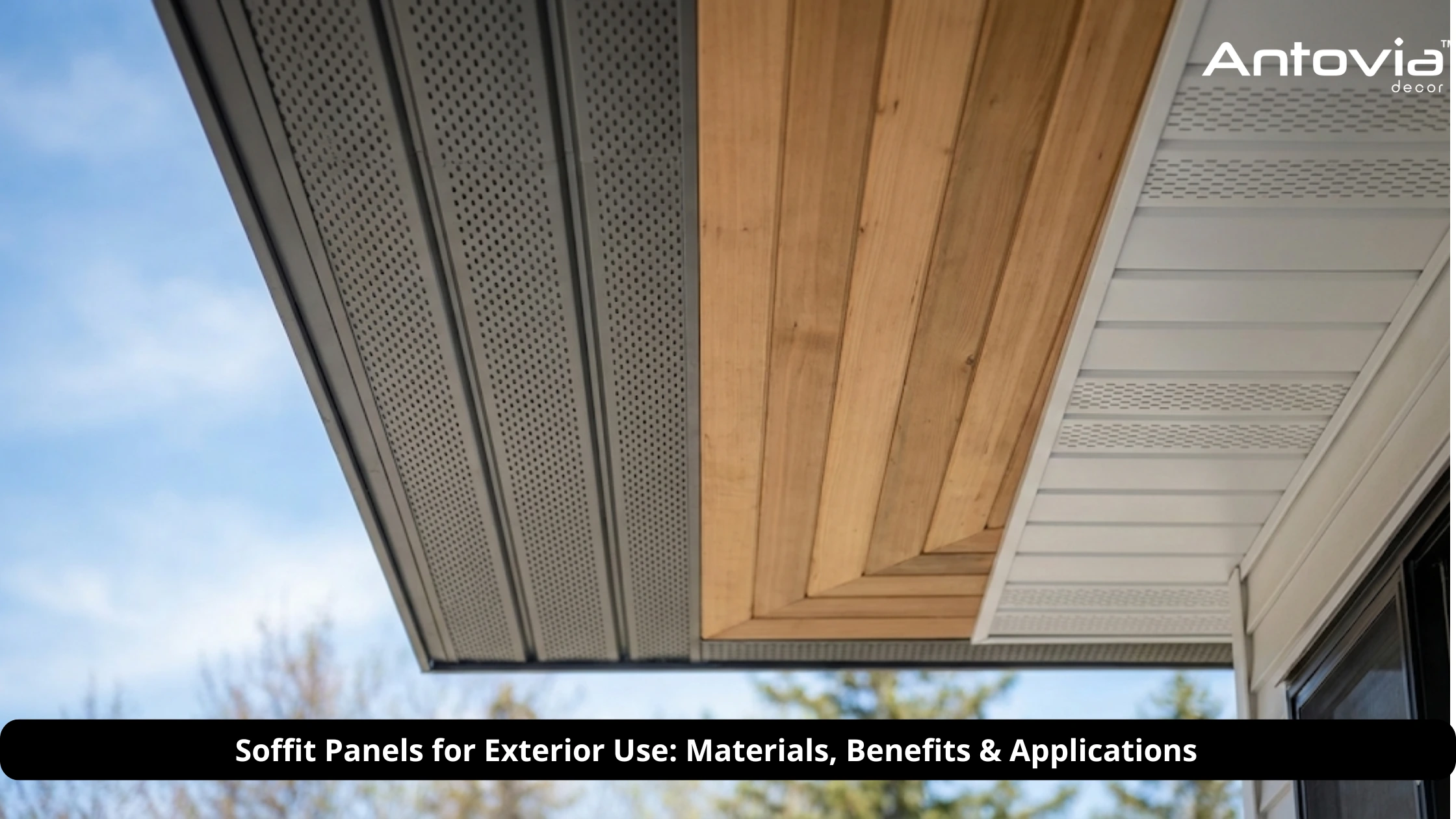
In modern construction, exterior detailing plays a much larger role than aesthetics alone. Exposed slabs, balcony undersides, parking ceilings, and entrance canopies are constantly subjected to moisture, heat, pollution, and visual scrutiny. When these areas are left untreated or finished with the wrong materials, they quickly become maintenance problems rather than architectural assets.
This is where exterior soffit panels become an essential part of building design. More than just ceiling coverings, soffit panels protect structural elements, improve durability, and deliver a clean, finished appearance to exterior spaces. When specified correctly, they also reduce long-term maintenance and improve the overall facade performance.
This guide is written for architects, builders, facade consultants, and developers who want a clear understanding of exterior soffit panels—what they are, why they matter, which materials work best, and how to apply them correctly in real projects.
What Are Exterior Soffit Panels?
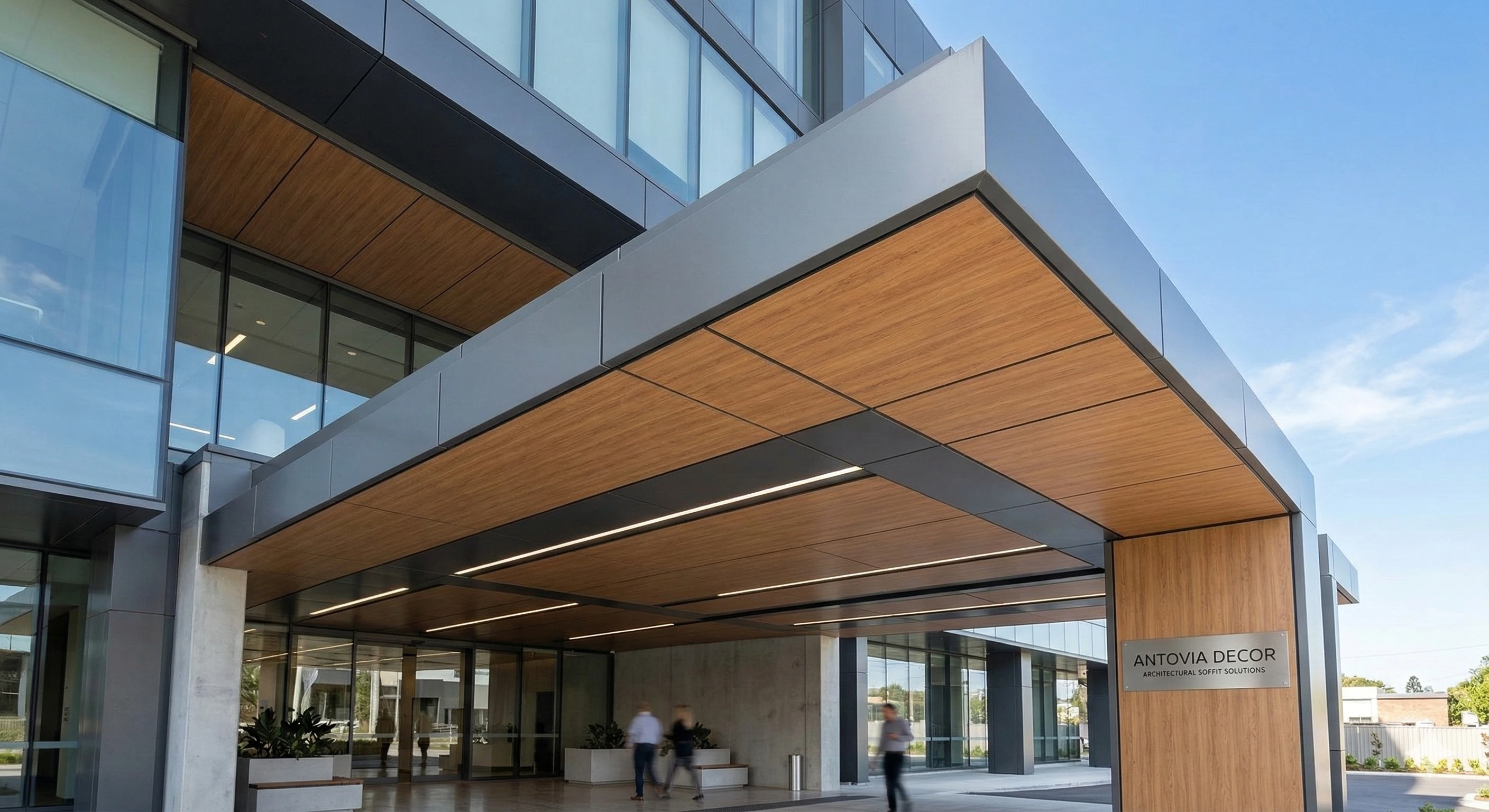
Exterior soffit panels are protective and decorative panels installed on the underside of exterior architectural elements such as slabs, balconies, overhangs, canopies, and parking structures. The term “soffit” refers to the exposed surface beneath these projections, which is often overlooked during facade planning.
Unlike interior ceiling panels, exterior soffit panels are designed to withstand outdoor conditions. They protect the building structure from moisture ingress, dirt accumulation, and environmental damage while creating a visually consistent finish across elevations.
Exterior soffit panels serve several functions:
- Conceal structural elements and service lines
- Protect concrete and steel from weather exposure
- Improve ventilation where required
- Enhance the overall architectural appearance
In contemporary buildings, soffits are no longer treated as leftover surfaces. Instead, they are considered an extension of the facade design, contributing to both performance and aesthetics.
Why Exterior Soffit Panels Are Important in Building Design
The importance of exterior soffit panels is often underestimated until problems start appearing. Untreated or poorly finished soffits can lead to moisture stains, peeling finishes, corrosion of reinforcement, and recurring maintenance issues.
From a design perspective, soffits also play a significant role in how a building is perceived. Entry zones, balconies, and circulation areas are all highly visible. Poorly detailed soffits can undermine an otherwise well-designed facade.
Architectural soffit panels help address these challenges by:
- Protecting exposed surfaces from rain and humidity
- Preventing dirt and pollution buildup
- Supporting airflow and ventilation where required
- Creating visual continuity across the building envelope
In practice, soffit treatment is one of the details that separates short-term construction from long-term architectural quality.
Key Benefits of Exterior Soffit Panels
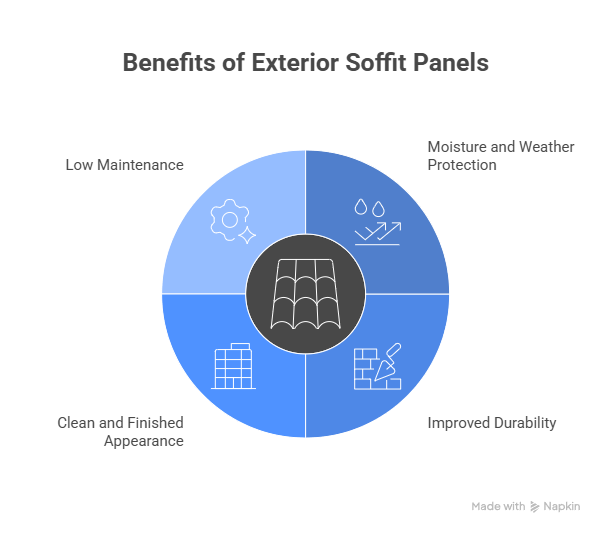
Correctly specified exterior soffit panels offer multiple performance and design benefits.
Moisture and Weather Protection
Exterior soffits are constantly exposed to moisture from rain, condensation, and humidity. Weather-resistant soffit panels protect the structure beneath, reducing the risk of surface damage and long-term deterioration. This makes exterior soffit systems highly effective as moisture resistant soffit panels that protect exposed slabs and ceilings from long-term damage.
Improved Durability
By shielding structural elements, soffit panels extend the life of concrete, steel, and finishes. This is particularly important in balconies, parking areas, and exposed walkways.
Clean and Finished Appearance
Exterior soffit panels create a uniform, finished look that enhances facade quality. They hide uneven concrete surfaces, service ducts, and wiring, improving overall visual appeal.
Low Maintenance
High-quality soffit panels are designed for exterior use and require minimal upkeep. This reduces repainting, repairs, and maintenance costs over the building’s lifecycle.
In real projects, most soffit failures are not design flaws—they result from choosing interior-grade materials for exterior exposure.For projects with high exposure, low maintenance soffit panels reduce repainting and repair cycles significantly.
Materials Used for Exterior Soffit Panels
Material selection is one of the most critical decisions when specifying exterior soffit panels. Each material offers different performance characteristics, maintenance requirements, and visual outcomes.
Aluminium Soffit Panels
Aluminium soffit panels are widely used in commercial and institutional buildings. They are lightweight, corrosion resistant, and suitable for large spans. Aluminium panels offer a clean, modern appearance and perform well in high-traffic exterior zones.
They are particularly effective in projects where long-term durability and low maintenance are priorities. Aluminium soffit panels are widely specified as UV resistant soffit panels for commercial and high-traffic exterior zones.
HPL Soffit Panels
HPL soffit panels are manufactured using high-pressure laminate technology, resulting in dense, solid panels with excellent weather resistance. They offer strong UV stability, moisture resistance, and dimensional stability.
HPL soffit panels are ideal for projects that require a balance between durability and design flexibility, including woodgrain and contemporary finishes for exterior ceilings. HPL soffit panels also offer options in fire resistant soffit panels, making them suitable for regulated commercial projects.
Metal Soffit Panels
Metal soffit panels, including steel-based systems, are commonly used in industrial or utility-focused buildings. They offer high strength but require proper corrosion protection and careful detailing to perform well outdoors.
Wooden Soffit Panels
Wooden soffit panels provide a warm, natural aesthetic. However, they are best suited for covered or semi-exterior areas, as they require regular maintenance and are sensitive to prolonged moisture exposure.
Material choice directly influences maintenance cycles, visual longevity, and facade performance over time.
Exterior Soffit Panels: Material Comparison
| Material Type | Key Advantages | Limitations | Best Use Cases |
| Aluminium Soffit Panels | Lightweight, corrosion resistant, low maintenance, clean modern look | Can feel industrial if poorly finished | Commercial buildings, entrances, parking areas |
| HPL Soffit Panels | High UV resistance, moisture resistant, design flexibility, solid structure | Slightly higher initial cost | Balconies, exterior ceilings, premium facades |
| Metal Soffit Panels | High strength, impact resistance | Requires corrosion protection, heavier | Industrial and utility buildings |
| Wooden Soffit Panels | Warm, natural appearance | High maintenance, limited weather resistance | Covered or semi-exterior areas |
Exterior Soffit Panels vs Interior Ceiling Panels
A common specification mistake is using interior ceiling panels for exterior soffits. While they may look similar initially, their performance differs significantly.
Interior ceiling panels are designed for controlled environments with limited moisture, temperature variation, and wind exposure. When used outdoors, they often warp, sag, discolor, or fail prematurely.
Exterior soffit panels, on the other hand, are engineered to handle:
- Weather exposure
- Moisture and humidity
- Structural movement
- Long-term environmental stress
Choosing exterior-grade materials is essential to avoid repeated repairs and visual degradation.
Exterior Soffit Panels vs Interior Ceiling Panels
| Criteria | Exterior Soffit Panels | Interior Ceiling Panels |
| Exposure Conditions | Designed for outdoor environments | Designed for indoor use only |
| Moisture Resistance | High | Low |
| UV Resistance | Yes | No |
| Structural Stability | Handles temperature variation | Can warp or sag outdoors |
| Installation System | Heavy-duty framing & fixings | Lightweight ceiling grid |
| Suitable Applications | Balconies, canopies, parking, overhangs | Living rooms, offices, interiors |
Where Exterior Soffit Panels Are Commonly Used
Exterior soffit panels are used across a wide range of building types and zones.
Common applications include:
- Building entrances and drop-off canopies
- Balconies and slab overhangs
- Parking structures and basements
- Exterior corridors and walkways
- Residential and commercial facades
In large developments, soffit panels for commercial buildings are commonly used at entrances, drop-off zones, and circulation areas.Soffit panels for balconies and parking areas require higher durability due to constant exposure and usage.
Installation Considerations for Exterior Soffit Panels
Even the best soffit panel material can fail if installation is not handled correctly.
Substructure and Framing
Exterior soffit panels require a stable substructure that can support panel weight and accommodate environmental loads. Proper framing ensures alignment and long-term stability.
Drainage and Ventilation
Soffit systems must allow for water drainage and airflow. Trapped moisture is a common cause of staining and panel damage.
Expansion and Movement
Exterior materials expand and contract due to temperature changes. Installation systems must allow for this movement to prevent cracking or distortion.
Wind and Load Resistance
In exposed areas, soffit panels must be securely fixed to withstand wind pressure and vibration.
Poor installation often leads to sagging panels, water trapping, and visible distortion—issues that are expensive to correct after completion.
Exterior Soffit Panels for Indian Climate Conditions
India’s climate presents unique challenges for exterior soffit applications.
Key factors include:
- High heat and prolonged UV exposure
- Heavy monsoon rainfall
- High humidity in coastal regions
- Pollution and dust accumulation in urban areas
Weather-resistant soffit panels are essential in these conditions. Aluminium and HPL soffit panels perform particularly well when specified correctly, offering long-term stability and color retention.
In coastal and high-humidity regions, corrosion resistance and moisture protection become critical. In hot climates, UV stability and surface durability matter far more than initial appearance.
Common Design & Specification Mistakes to Avoid
Despite good intentions, many projects face soffit-related issues due to avoidable mistakes.
Common errors include:
- Treating soffits as purely decorative elements
- Using interior-grade materials outdoors
- Ignoring drainage and ventilation requirements
- Poor coordination between facade and structural teams
Addressing soffit design early in the project helps avoid these problems and ensures long-term performance.
How to Choose the Right Exterior Soffit Panels for Your Project
Selecting the right soffit panel system depends on several factors.
Key considerations include:
- Climate exposure and location
- Building type and usage
- Maintenance expectations
- Budget versus lifecycle cost
For most commercial and residential projects, investing in durable exterior soffit panels reduces maintenance, improves appearance, and protects the building structure over time.
Why Architects Choose Exterior Soffit Panels from Antovia Decor
When exterior soffits demand long-term durability and consistent finish quality, Antovia Decor offers solutions designed for real-world conditions. Their exterior soffit panels are engineered to handle heat, humidity, and weather exposure while maintaining clean detailing and surface stability. With materials suitable for demanding climates and applications, Antovia Decor supports architects and builders who prioritize performance, longevity, and refined exterior finishes.
Final Verdict: Why Exterior Soffit Panels Matter in Modern Construction
Exterior soffit panels are no longer optional finishing elements—they are an essential part of durable, well-designed buildings. By protecting structural components, improving visual quality, and reducing maintenance demands, soffit panels add long-term value to both residential and commercial projects.
The key lies in choosing the right material, detailing the system correctly, and ensuring professional installation. When specified with performance in mind, exterior soffit panels contribute significantly to the longevity, safety, and architectural quality of modern buildings.
Frequently Asked Questions (FAQ)
1) What are exterior soffit panels used for?
Exterior soffit panels are used to protect and finish the underside of slabs, balconies, canopies, and overhangs while improving durability and appearance.
2) Which material is best for exterior soffit panels?
Aluminium and HPL soffit panels are among the best options due to their weather resistance, durability, and low maintenance requirements.
3) Are exterior soffit panels weather resistant?
Yes. Exterior soffit panels are designed to withstand moisture, heat, and environmental exposure when specified correctly.
4) Are exterior soffit panels suitable for Indian climate?
Yes. When the right materials are chosen, soffit panels perform well across India’s diverse climate conditions.
5) How are exterior soffit panels installed?
They are installed using framing and fixing systems that allow for drainage, ventilation, and thermal movement.


