How to Choose Architectural Panels for Exterior & Interior
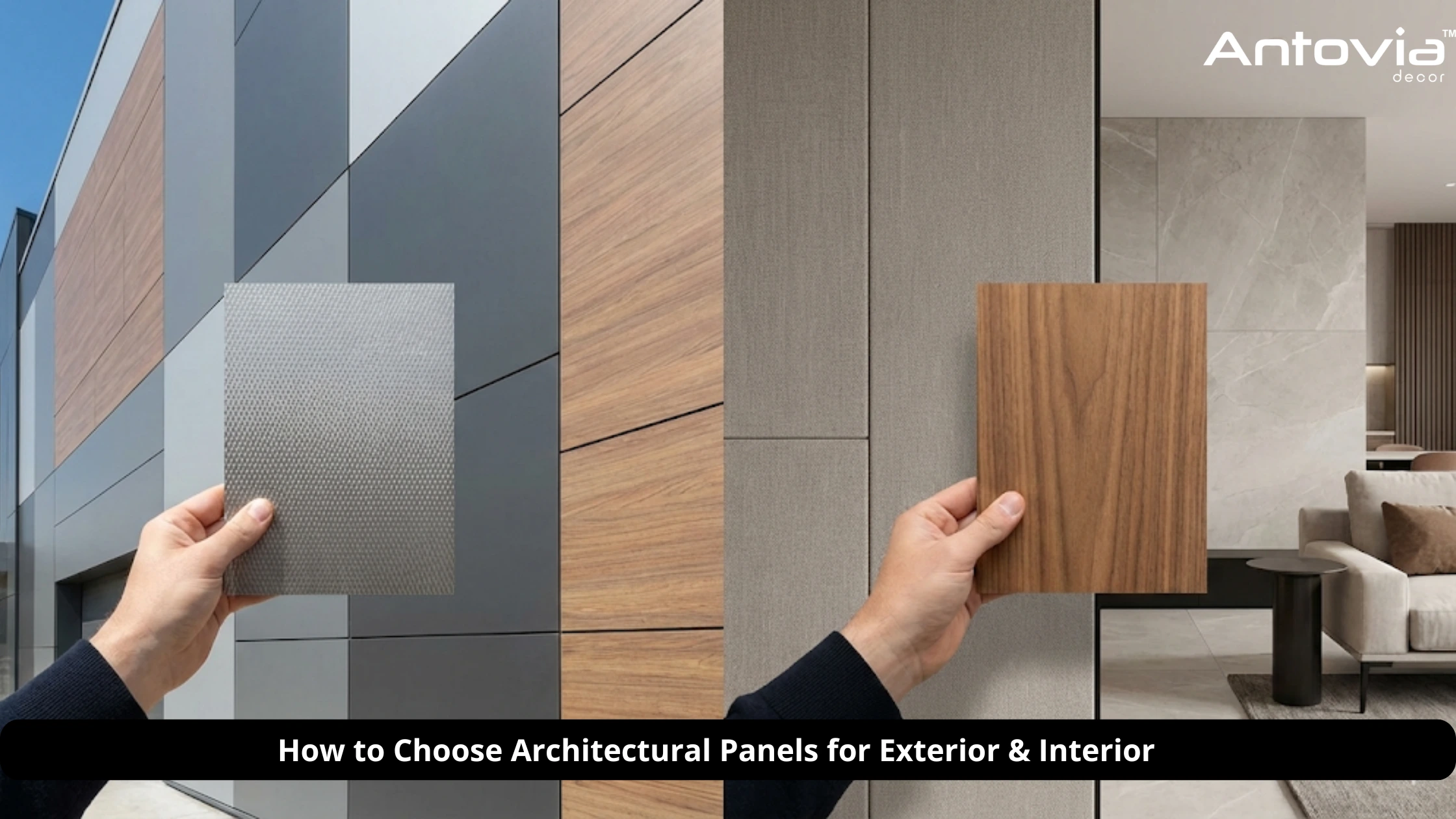
Architectural panels have become one of the most widely used surface solutions in modern construction. As buildings evolve toward cleaner lines, faster construction timelines, and lower maintenance expectations, panels offer a controlled, performance-driven alternative to traditional finishes like paint, plaster, or stone cladding. Today, architectural panels are used across facades, exterior walls, interior partitions, ceilings, and feature surfaces in both residential and commercial buildings.
However, choosing architectural panels is no longer a simple design choice. Panels are directly exposed to sunlight, rain, humidity, temperature fluctuations, pollution, and constant human interaction. Selecting the wrong panel type can lead to early surface failure, color fading, moisture damage, fire compliance issues, and high replacement costs. Despite this, many projects still choose panels based on appearance or short-term cost rather than long-term performance.
This guide is written for architects, interior designers, builders, facade consultants, and developers who want a clear, practical framework for choosing the right architectural panels for exterior and interior use—based on material behavior, exposure conditions, and lifecycle value.
What Are Architectural Panels?
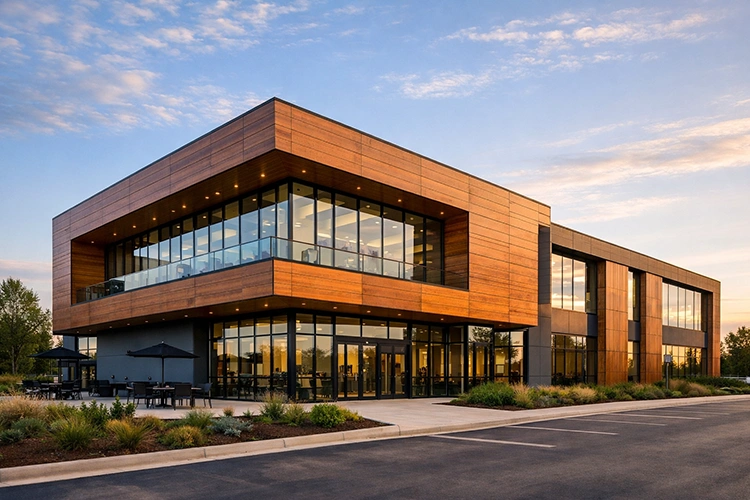
Architectural panels are factory-manufactured surface materials designed to cover building elements such as walls, facades, ceilings, and partitions. Unlike site-applied finishes, panels are engineered products with predictable thickness, density, and performance characteristics.
Architectural panels are commonly used because they:
- Provide uniform finishes across large areas
- Improve durability compared to paint or plaster
- Reduce on-site labor and finishing time
- Offer controlled performance in demanding environments
They are available in various forms, including architectural wall panels, architectural cladding panels, and decorative architectural panels, each suited to specific applications. In modern architecture, panels are preferred because they deliver consistency, repeatability, and long-term reliability.
Why Choosing the Right Architectural Panels Matters
Architectural panels interact directly with both the building envelope and its users. When the wrong panels are specified, issues often appear within a few years.
Key reasons correct panel selection is critical:
Durability and Lifespan
Durable architectural panels resist abrasion, impact, and environmental stress. Poor-quality panels may warp, crack, or discolor prematurely.
Maintenance and Operational Cost
Low maintenance architectural panels reduce repainting, repairs, and surface replacement—especially important for commercial buildings and public spaces.
Safety and Compliance
Fire resistant architectural panels and moisture resistant wall panels are essential in many regulated environments such as hospitals, offices, and high-rise buildings.
Lifecycle Value
Panels with a higher upfront cost often deliver better value over 15–25 years by reducing maintenance and replacement risk.
In most cases, panel failures are caused by specification errors, not by defective products.
Key Differences Between Interior and Exterior Architectural Panels
One of the most common mistakes in construction is using the same architectural panels for both interior and exterior applications without understanding performance differences.
Exterior architectural panels must handle:
- Direct sunlight and UV radiation
- Rain, humidity, and moisture ingress
- Temperature expansion and contraction
- Wind pressure and airborne pollutants
Interior architectural panels, by contrast, operate in controlled environments and are optimized for:
- Aesthetic flexibility
- Ease of cleaning
- Lower structural stress
Using interior panels outdoors often leads to surface fading, delamination, warping, and early failure.
Comparison Table: Interior vs Exterior Architectural Panels
| Criteria | Interior Architectural Panels | Exterior Architectural Panels |
| Exposure | Controlled indoor environment | Sun, rain, humidity, pollution |
| UV Resistance | Not required | Essential |
| Moisture Resistance | Moderate | High |
| Structural Density | Standard | High |
| Fixing System | Lightweight | Heavy-duty |
| Typical Use | Interior walls, partitions | Facades, exterior walls |
Factors to Consider When Choosing Architectural Panels
A structured decision-making approach helps avoid costly mistakes.
Application Type
Clearly identify whether panels will be used for interior walls, exterior walls, facades, ceilings, or partitions. This determines the required material grade.
Climate Conditions
In regions with harsh weather, architectural panels for Indian climate conditions must withstand high heat, monsoons, humidity, and pollution.
Usage and Traffic
High-traffic areas such as malls, offices, hospitals, and transport hubs require durable architectural panels with strong abrasion resistance.
Fire Safety Requirements
Fire resistant architectural panels are mandatory in many commercial and institutional buildings and must be considered at the specification stage.
Maintenance Expectations
Low maintenance architectural panels are preferred in projects where frequent repairs would disrupt operations.
Budget vs Long-Term Cost
The cheapest panel is rarely the most economical over the building’s lifespan.
Materials Commonly Used in Architectural Panels
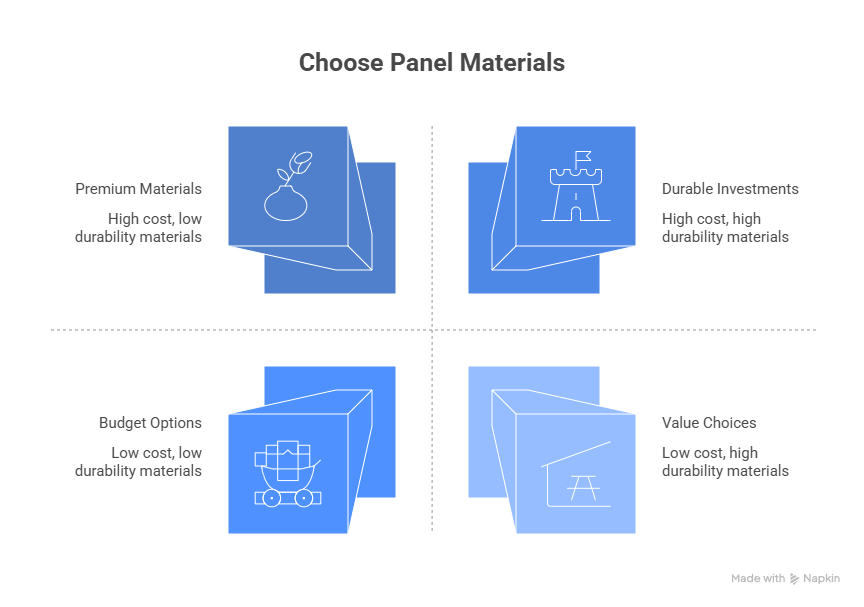
Material selection defines how panels perform over time.
HPL Architectural Panels
HPL architectural panels are among the most versatile panel solutions. Manufactured under high pressure and temperature, they offer excellent durability, moisture resistance, and finish stability. Exterior grade HPL panels are specifically designed for outdoor use and perform well in both facades and exterior walls.
Aluminium Architectural Panels
Aluminium architectural panels are lightweight, corrosion resistant, and widely used in modern facades. They are ideal for large elevations where weight reduction is important.
Metal Architectural Panels
Metal architectural panels offer high strength and are often used in industrial or utility-focused buildings. Performance depends on coating quality and corrosion protection.
Compact Laminate Panels
Compact laminate panels are solid-core panels with exceptional impact and moisture resistance. They are frequently used in demanding exterior and semi-exterior applications.
Architectural Panels for Interior Applications
Interior architectural panels are selected for design flexibility, hygiene, and durability.
Common applications include:
- Architectural panels for interior walls
- Feature walls and partitions
- Commercial interiors and offices
- Educational and healthcare facilities
Architectural wall panels made from HPL and compact laminates are widely used because they resist scratches, stains, and frequent cleaning. Decorative architectural panels allow designers to achieve consistent finishes without relying on site-applied coatings.
Architectural Panels for Exterior & Facade Applications
Exterior architectural panels face the most demanding conditions.
Architectural panels for exterior walls and architectural panels for facades must provide:
- Weather and UV resistance
- Moisture control
- Fire safety compliance
- Secure fixing systems
Exterior-grade panels are essential for long-term facade performance. Using interior panels outdoors remains one of the most expensive specification errors.
Performance Requirements of Architectural Panels
Panels that look similar on drawings can perform very differently in real conditions.
Abrasion Resistance
Essential for public and commercial spaces where surfaces are frequently touched or cleaned.
Moisture Resistance
Moisture resistant wall panels prevent swelling, staining, and surface breakdown.
UV Stability
Weather resistant architectural panels retain color and texture despite prolonged sun exposure.
Fire Performance
Fire resistant architectural panels help meet building safety regulations and reduce risk.
Dimensional Stability
Panels must resist warping and cracking due to temperature variation.
Architectural Panels for Indian Climate Conditions
Indian conditions accelerate material degradation when panels are poorly specified.
Challenges include:
- Extreme heat and prolonged sunlight
- Heavy monsoon rainfall
- Coastal humidity and corrosion
- Urban pollution and dust
Architectural panels for Indian climate conditions should always be exterior-grade, UV stable, and moisture resistant. Materials that perform well in milder climates often fail faster in Indian environments if not adapted.
Installation & Detailing Considerations for Architectural Panels
Even the best panels can fail if installed incorrectly.
Key installation factors include:
- Proper substrate preparation
- Allowance for thermal expansion
- Correct fixing systems
- Adequate ventilation behind panels
- Accurate edge and joint detailing
Poor installation is a major cause of panel-related issues, even when high-quality materials are used.
Cost Considerations: Short-Term Price vs Long-Term Value
Architectural panels should never be selected on material cost alone.
Low-cost panels may:
- Fade or deteriorate quickly
- Require frequent repairs
- Increase maintenance budgets
Higher-quality panels typically:
- Maintain appearance longer
- Reduce replacement cycles
- Deliver better lifecycle value
For commercial buildings, lifecycle cost is more important than initial savings.
Comparison Table: Common Architectural Panel Materials
| Panel Material | Best Use | Durability | Maintenance | Interior / Exterior |
| HPL Panels | Walls, facades | High | Low | Both |
| Compact Laminates | Wet & exterior zones | Very High | Very Low | Exterior |
| Aluminium Panels | Facades, cladding | High | Low | Exterior |
| Metal Panels | Industrial buildings | High | Medium | Exterior |
| Decorative Panels | Feature interiors | Medium | Low | Interior |
Common Mistakes to Avoid When Selecting Architectural Panels
- Choosing panels based only on appearance
- Using interior panels outdoors
- Ignoring fixing and detailing systems
- Underestimating maintenance requirements
- Poor coordination between design and execution
Avoiding these mistakes significantly improves long-term performance.
How to Build the Right Architectural Panel Palette
A successful panel palette balances aesthetics with performance.
Architects should:
- Coordinate interior and exterior panels
- Maintain finish consistency
- Use durable panels in exposed zones
- Think in terms of lifecycle value
Architectural Panels in Commercial vs Residential Projects
The selection approach for architectural panels differs significantly between commercial and residential buildings.
In commercial projects, panels are chosen primarily for durability, safety, and low maintenance. Architectural panels for commercial buildings must handle high footfall, frequent cleaning, and constant exposure without visible deterioration. Fire resistance, impact resistance, and long-term color stability are often non-negotiable requirements.
In residential projects, design flexibility and visual comfort play a larger role. Architectural panels for residential buildings are often selected to create warm interiors, clean facades, and cohesive design themes. However, durability and weather resistance remain critical for exterior and balcony applications.
Understanding this difference helps architects select architectural panels that match both functional and aesthetic expectations.
How to Choose Architectural Panels Correctly
Before finalizing architectural panels for any project, architects and designers should review a structured decision checklist.
Start by clearly identifying whether the panel will be used for interior or exterior applications. Next, evaluate exposure conditions such as sunlight, moisture, and temperature variation. Assess usage intensity to determine abrasion and impact resistance requirements.
Fire safety, maintenance expectations, and installation systems should be reviewed early in the design stage. Finally, compare initial cost against lifecycle value rather than focusing only on material price.
Using this checklist reduces the risk of incorrect specification and ensures that architectural panels perform as intended over time.
Why Architects Choose Architectural Panels from Antovia Decor
Architects and designers increasingly seek architectural panels that deliver consistent performance across interior and exterior applications. Antovia Decor focuses on panel solutions engineered for durability, climate readiness, and long-term finish stability. With offerings that include HPL architectural panels, exterior grade HPL panels, and facade-oriented systems, Antovia Decor supports projects where material reliability and design consistency are essential.
Final Thoughts: Choosing Architectural Panels with Confidence
Architectural panels play a critical role in how buildings perform and age. The right panels enhance durability, reduce maintenance, and preserve architectural intent, while the wrong choice leads to early failure and unnecessary cost.
By understanding exposure conditions, material behavior, installation requirements, and lifecycle value, architects and developers can confidently choose architectural panels that deliver reliable performance for decades.
Frequently Asked Questions (FAQ)
1) How do I choose architectural panels for exterior use?
Select exterior-grade panels with UV resistance, moisture protection, and certified fire performance.
2) Which architectural panels are best for interior walls?
HPL and compact laminate architectural wall panels are widely used for durability and easy maintenance.
3) Are architectural panels suitable for exterior applications?
Yes, when exterior-grade materials and proper fixing systems are used.
4) What is the difference between interior and exterior architectural panels?
Exterior panels are engineered for weather exposure, while interior panels are designed for controlled environments.
5) Which architectural panels require low maintenance?
HPL panels, compact laminates, and aluminium architectural panels are considered low maintenance architectural panels.


