Exterior Grade HPL Panels vs ACP for Building Facades
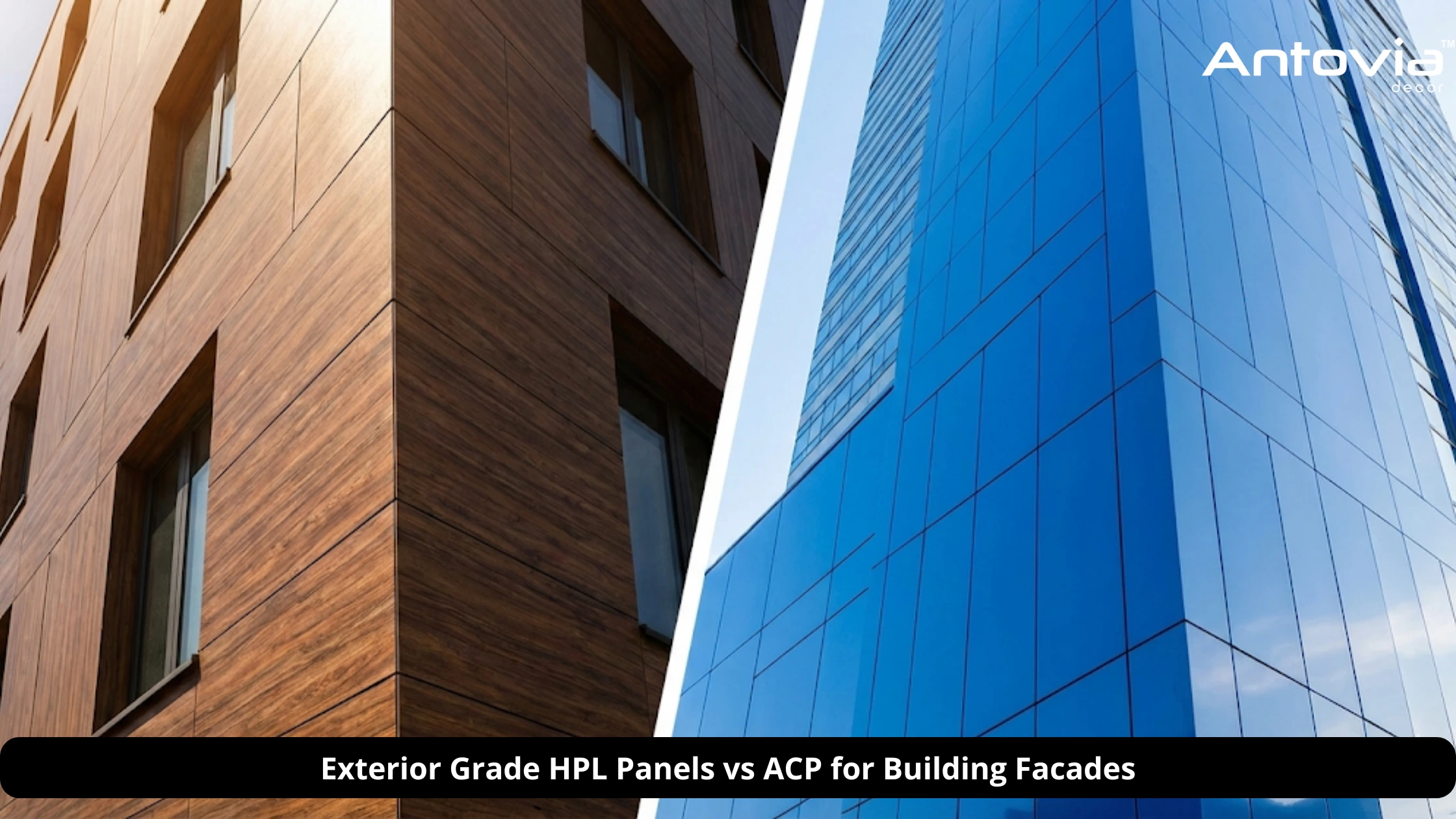
Choosing the wrong facade cladding material can lead to serious consequences—ranging from fire safety concerns and regulatory rejections to costly facade replacements years before a building’s lifecycle ends. Yet, many commercial and residential projects still select aluminium composite panels (ACP) based purely on upfront cost, without fully evaluating long-term performance risks.
This detailed comparison of exterior grade HPL panels vs ACP panels is written specifically for architects, builders, developers, and project consultants who need facade solutions that meet modern safety norms, withstand harsh Indian climate conditions, and deliver long-term value—without compromises.
This comprehensive guide explains HPL panels vs ACP for building facades, covering technical differences, safety aspects, durability, lifecycle cost, sustainability, and application suitability—so architects and project decision-makers can choose the right exterior wall cladding panels with confidence.
Why the HPL vs ACP Comparison Is So Important Today
Over the past decade, facade failures, fire incidents, and premature material degradation have forced the construction industry to reassess exterior material choices. Regulatory bodies, architects, and developers now demand fire resistant facade panels, weather resistant wall panels, and materials that comply with modern building safety expectations.
Choosing the wrong facade material can result in:
- Increased safety risks
- High maintenance expenses
- Shortened facade lifespan
- Compliance and approval challenges
Understanding the difference between HPL and ACP panels is no longer optional—it is essential for responsible architectural planning.
Quick Overview: HPL Panels vs ACP Panels
This snapshot gives a clear, high-level comparison before we dive deeper.
Feature |
Exterior Grade HPL Panels |
|
|
Core Composition |
Phenolic resin laminate | Polyethylene / mineral core |
|
Fire Performance |
High (FR grades available) | Varies by core material |
|
Weather Resistance |
Excellent | Moderate |
|
Impact Resistance |
High | Low–Medium |
| UV Stability |
Strong |
Can fade over time |
|
Typical Lifespan |
20–30 years |
10–15 years |
|
Maintenance |
Low | Medium |
|
Best Use |
Commercial & premium facades |
Budget-driven applications |
This overview already highlights why many architects now prefer HPL cladding panels for long-term exterior applications.
What Are Exterior Grade HPL Panels?
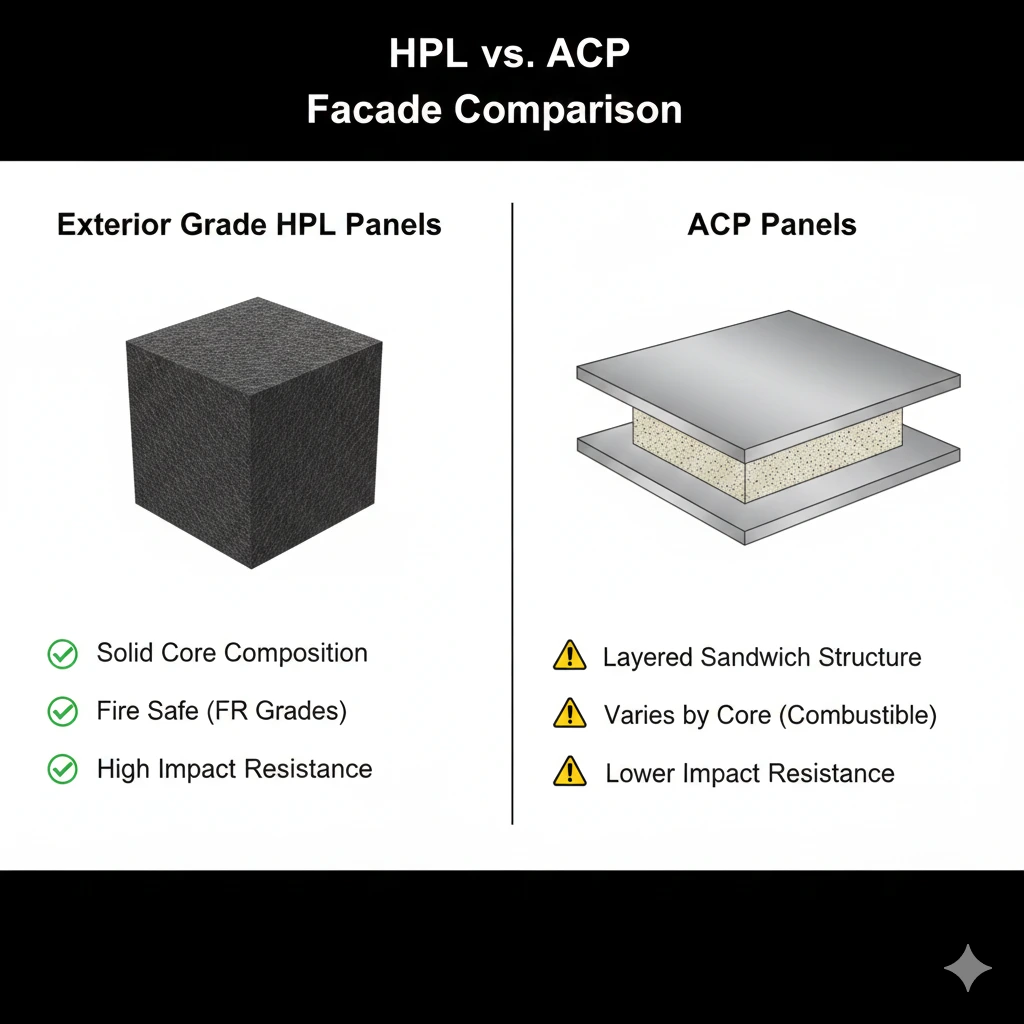
High Pressure Laminate (HPL) panels are solid architectural surface materials manufactured by compressing multiple layers of kraft paper impregnated with phenolic resin laminate under very high pressure and temperature.
Unlike surface-coated products, HPL panels are dense throughout, giving them superior structural stability and resistance to environmental stress.
Key Characteristics of HPL Panels for Exterior Use
- Non-porous, compact structure
- Resistant to moisture and humidity
- High UV resistance
- Excellent dimensional stability
- Compatible with rainscreen cladding systems
Because of these properties, HPL panels for exterior applications are widely used in:
- Commercial building facade cladding
- Office building exterior cladding
- Mall and hospital facade panels
- Educational and institutional buildings
- Industrial building facade materials
What Are Aluminium Composite Panels (ACP)?
An aluminium composite panel (ACP) consists of two thin aluminium sheets bonded to a lightweight core. The core material is typically polyethylene (PE) or a mineral-filled compound.
ACP panels gained popularity due to:
- Lightweight construction
- Easy fabrication and bending
- Lower initial material cost
However, ACP panels rely heavily on the quality of the core, which directly affects fire safety, durability, and long-term reliability. This dependency makes ACP panels less predictable in demanding exterior conditions.
Material & Structural Differences Between HPL and ACP
The internal structure of a facade panel determines how it performs over time.
HPL Panels
- Solid laminate composition
- No hollow or layered weak zones
- High impact resistance
- Stable under temperature variations
ACP Panels
- Sandwich structure
- Performance varies by core material
- Risk of delamination over time
- Lower resistance to physical impact
This fundamental difference explains why HPL panels for commercial facades offer more consistent and reliable performance than ACP panels.
Why Fire Safety Changed the HPL vs ACP Debate
Fire safety has become one of the most important considerations in facade design, especially for commercial buildings, hospitals, malls, and high-rise structures.
Many global facade fire incidents have been linked to combustible ACP cores. While fire-retardant ACP options exist, they are:
- Costlier
- Often misunderstood during specification
- Dependent on correct installation
HPL Panels and Fire Resistance
Exterior grade HPL panels are available in fire-retardant (FR) grades that:
- Reduce flame spread
- Produce lower smoke density
- Support compliance with modern safety standards
For projects where fire safe facade cladding materials are required, HPL panels are widely considered a safer and more reliable option.
How HPL and ACP React to Sun, Rain & Pollution
Facade panels must perform consistently under harsh environmental exposure.
HPL Panels
HPL panels are engineered as weather resistant facade panels, capable of withstanding:
- Heavy rainfall
- High humidity
- Intense sunlight
- Pollution and dust
Their UV-stable surface prevents fading, cracking, and surface deterioration over time.
ACP Panels
ACP panels may experience:
- Color fading due to UV exposure
- Edge corrosion in humid climates
- Core degradation if moisture penetrates
This makes HPL panels a better choice for exterior architectural panels in long-term projects.
Which Facade Panel Survives Real-World Abuse?
Durability is critical for exterior wall panels for commercial buildings, where facades are exposed to constant environmental and physical stress.
HPL Panels
- High impact resistance
- Scratch-resistant surface
- Long lifespan exterior panels (20–30 years)
ACP Panels
- Dent easily
- Vulnerable to deformation
- Shorter service life
For architects seeking low maintenance facade materials, HPL panels clearly outperform ACP.
Installation Reality: What Works Long Term
Many competitor blogs rank well because they explain installation systems, which buyers actively search for.
HPL Panel Installation
- Suitable for ventilated facade systems
- Supports rainscreen cladding designs
- Allows thermal expansion gaps
- Easy panel replacement without disturbing the facade
ACP Panel Installation
- Lightweight and easy to install
- Requires precise handling to avoid deformation
- Limited tolerance for long-term structural movement
HPL systems provide better performance in modern facade engineering.
Which Is Better for Indian Climate? Heat, Rain & Pollution Impact
India’s climate is harsh and unpredictable. A façade material that performs well in Europe may fail quickly here. This is where the difference between exterior grade HPL panels and ACP panels becomes very clear.
How exterior grade HPL panels handle Indian conditions:
- Designed to withstand extreme heat and prolonged UV exposure
- UV-resistant top layer prevents fading, chalking, and discoloration
- Performs consistently in high-temperature regions like Gujarat, Rajasthan, and Central India
- Dense, non-porous structure resists moisture absorption during heavy monsoons
- Ideal for coastal and high-humidity cities like Mumbai, Chennai, and Kochi
ACP panel limitations in Indian weather:
- Higher chances of color fading over long-term sun exposure
- Moisture ingress can cause panel delamination or corrosion
- Requires precise sealing and frequent inspections in rainy regions
- Surface dullness becomes visible faster in polluted urban environments
Final climate verdict:
For long-term exterior wall cladding in Indian conditions, exterior grade HPL panels clearly outperform ACP panels in durability, appearance retention, and weather resistance.
Cost Comparison: Short-Term Price vs Long-Term Investment
Many projects initially choose ACP panels because of their lower upfront cost. However, façade materials should never be judged only on purchase price.
ACP panels – short-term savings, long-term expense:
- Lower initial material cost
- Higher chances of dents, fading, and surface damage
- Periodic repainting or replacement required
- Increased maintenance costs over 8–10 years
Exterior grade HPL panels – smart long-term investment:
- Slightly higher initial cost
- Minimal maintenance required
- No repainting or surface treatment needed
- Lifespan of 15–25 years with consistent appearance
|
Cost Factor |
HPL Panels | ACP Panels |
|
Initial Material Cost |
Higher |
Lower |
|
Maintenance Cost |
Low |
Medium |
|
Replacement Risk |
Very Low |
High |
|
Lifecycle Value |
High | Moderate |
For commercial buildings, malls, hospitals, and corporate offices, HPL panels deliver better ROI by reducing recurring façade maintenance costs.
Sustainability & Environmental Considerations
Sustainability is increasingly influencing material selection.
HPL panels contribute positively by:
- Long service life reduces waste
- Low maintenance lowers resource consumption
- Compatibility with energy-efficient facade systems
This positions HPL panels as sustainable facade materials for buildings, especially in long-term commercial projects.
Why Leading Architectural Brands Prefer HPL Panels
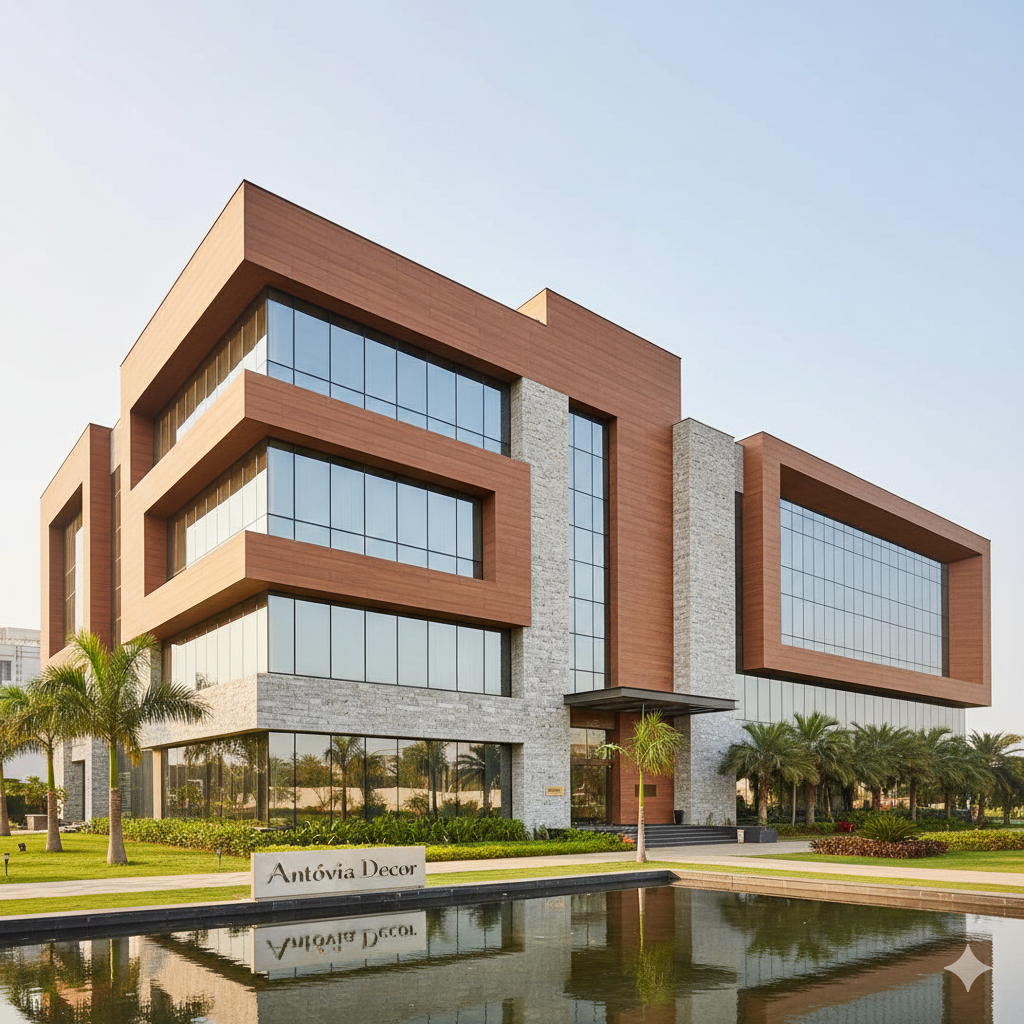
Reputed architectural surface manufacturers increasingly focus on high-performance facade solutions rather than short-term trends. Brands specializing in HPL laminates, compact laminates, louvers, and soffit panels emphasize:
- Compliance-ready materials
- Fire-safe exterior systems
- Design flexibility without compromising durability
- Support for commercial-scale projects
This shift reflects market demand for reliable, specification-driven facade materials, where HPL panels play a central role.
Architect & Builder Preference: Real-World Applications
Architects and builders choose façade materials based on reliability, flexibility, and long-term performance — not just aesthetics.
Where exterior grade HPL panels are widely used:
- Commercial complexes and IT parks
- Airports and transportation hubs
- Hospitals and educational institutions
- Premium residential projects
- Corporate office buildings
Why professionals prefer HPL panels:
- Wide range of finishes: woodgrain, stone, metallic, solid colors
- Better dimensional stability for ventilated façade systems
- High impact resistance for busy commercial zones
- Consistent performance across different elevations and climates
ACP panels are still used for signage and low-rise projects, but for permanent architectural façades, HPL panels are the preferred choice.
Why Architects Prefer Exterior Grade HPL Panels from Antovia Decor
Material quality matters, but manufacturer expertise makes the real difference.
Why Antovia Decor stands out:
- Specializes in exterior-grade architectural HPL solutions
- Panels engineered for Indian climate conditions
- Certified fire-retardant and weather-resistant grades
- Consistent color, texture, and finish quality across batches
Value for architects and builders:
- Multiple thickness and panel size options
- Contemporary design finishes aligned with modern architecture
- Technical documentation and installation guidance
- Reliable support for large commercial and export projects
For architects seeking a façade solution that balances design freedom, durability, safety, and long-term performance, Antovia Decor’s exterior grade HPL panels are a dependable choice.
Final Verdict: Which Facade Material Is Better?
If your project prioritizes:
- Fire safety
- Long-term durability
- Weather resistance
- Low maintenance
- Commercial-grade performance
Exterior grade HPL panels are clearly the better choice for building facades.
ACP panels still serve limited, low-risk applications, but for serious architecture, HPL panels outperform ACP across all critical parameters.
Frequently Asked Questions (FAQ)
1) Is HPL better than ACP for exterior use?
Yes. HPL panels provide superior durability, fire resistance, and weather performance.
2) Are ACP panels fire resistant?
Only specific grades are fire retardant, and performance depends on the core material.
3) How long do HPL facade panels last?
Typically 20–30 years with minimal maintenance.
4) Which facade panel is more durable?
HPL panels are significantly more impact-resistant and stable.
5) What is the best cladding material for building facades?
For commercial and premium projects, exterior grade HPL panels are among the best available options.
6) Is HPL cladding suitable for high-rise buildings?
Yes. Exterior grade HPL panels are widely used in high-rise projects due to their fire-retardant options, ventilated facade compatibility, and long-term structural performance.
7) Is HPL more sustainable than ACP?
HPL panels offer better sustainability due to longer service life, lower maintenance requirements, and reduced replacement frequency, which lowers overall material waste over time.


